Saturday, June 6, 2009

Keep on trekking

Entry 39:
Everybody knows the expression "ugly American," but we discovered other "ugly" travelers as we readied ourselves to leave Kathmandu for Pokara, a city approximately 7 hours away where tourists head before the start of their trek into the mountains. As there's only one departure time for Pokara, all the tourists gather at the bus depot at approximately 5am. As we sat quietly sipping our tea, a loud group of English speakers sat down at a table near us. One particularly annoying woman kept repeating in a loud voice (inbetween bites into her danish and chain smoking her cigarettes) how great a packaged danish was. Luckily, she and her group of friends ended up on a different bus from us.

Upon arriving in Pokara, we were greeted by the usual cast of characters trying to get us to come to their guesthouse, promising us a wonderful room for a great price. They were even willing to drive us there at no charge. Sure enough, after seeing the room, the price given to us ahead of time was suddenly inflated, but was then magically reversed as soon as we were out the door. It's all part of the game they like to play with tourists.

Our next order of business was to secure the services of a porter to carry our gear on our 6-day trek into the mountains. We walked from agency to agency until we found someone with whom we felt comfortable. It was especially important for us to secure someone who could understand that Marc would need special attention along the trek. We agreed to meet Ponkaz, our porter, the next morning at the office and begin our adventure.

We then wandered down the main street and sat at a sidewalk cafe for a snack. We ordered two OJs from our pint sized waiter, a 9-year-old local with a pretty good command of English. He was in charge of taking orders while his 5-year-old brother was in charge of squeezing fruit. Twenty minutes later two buckets of juice arrived at our table. That night we dined fire-side at Lemon Tree restaurant. As with Kathmandu, Pokara only has sporadic electricity.

After a 90 minute drive the next morning to Nayapul, we hopped out of the taxi along with Ponkaz and prepared for our trek in the Annapurna region. We weaved through the hoards of Korean tourists with their massive SLR cameras and giant duffel bags. That day, we came across some local children who danced for us:

In addition to seeing dancing children, along the trail we saw donkey trains and shephards with their flocks of goats and sheep.

Seven hours after leaving the taxi, we climbed the stone stairs and arrived at our first tea house in the small town of Ghandruk. We weren't sure what to expect and were pleasantly surprised. As soon as we got to our room, Ponkaz came to get our food order for dinner. We told him we weren't hungry yet and that we'd order when we got to the dining room. What he failed to explain was that the kitchen takes quite a long time to prepare the food. Therefore, it is customary to order your meal ahead of schedule. As we were uninformed, we ended up waiting a long time for our order that evening. After dinner we made sure to give the kitchen our breakfast order so we wouldn't have to wait in the morning.

Note: The Nepali government has made a strong effort to encourage trekkers to refill their water bottles at their tea houses where water is purified as a way to avoid the waste of plastic bottles. This allowed us to drink as much water as we wanted without worrying about having to carry a lot of weight.

After a quick stop at a local museum, we hit the trail onto our next destination. It was a nice sunny day and we got to sunbathe during our lunch stop at Hillside Paradise, a restaurant on the trail. The owners had a dog around whose neck they hung a cow bell. Just when we thought we were having lunch with a cow, the dog turned up.

During our second day of the trek, we came across a group of local teenagers who were trekking with their teacher. The girls in the group took turns interviewing Marc. They wanted to know where we were from, among other things, and took notes of the answers. We managed to take a photo with them.

We continued our trek until we reached a village named Baan That. At this point, the days were fairly warm out, but the nights were very cold. Additionally, at this altitude it is easy to become dehydrated, so we were both drinking a lot of water and hot tea. Unfortunately, at this particular tea house, the toilet was located down a flight of stairs several feet away from the rooms. Since we went to sleep at roughly 9pm, Marc was up a couple of times in the middle of the night to take care of nature's business. In an attempt to save himself from falling down the stairs, he merely walked outside the room and "watered the flowers."

On our third day, we had to climb up and down hundred of stairs. We breaked at a place named "Lonely Planet" of all names. The local women there were sitting around a picnic table talking. We asked permission to take a photo with them, but apparently they didn't realize that would actually involve them having to look at the camera. Here's the result:


The rest of the day we walked through a forest to the summit. We were feeling a bit silly by this point:

We then descended to Gorepani where we spent the night. That evening we sat by the fire to stay warm.

Day four: We woke up exceedingly early to watch the sunrise. Once again, there were many stairs involved. Considering it was early in the morning, still dark, and all the stairs were going up, it was difficult to get to the top of Poon Hill. Marc was not feeling well and ended up waiting alongside the middle of the trail while Sharon continued up to the top. Although this exercise involved a lot of early morning sweat, it was worthwhile:

On my way back down the trail, I found Marc shivering from the cold. His lack of movement combined with the outside temperature left him feeling miserable.

Side Note: Did we forget to mention Marc's condition? Back in Kathmandu, Marc had experienced some "gastro-intestinal" distress. After loading up on Immodium, he was "stuffed up" for several days. Consequently, on the trek we stopped at a Red Cross firstaid station where we purchased a laxative. Within a couple of hours, Marc was contributing back to nature. Later that night at the tea house, Marc would spend the majority of the time perched on his thrown. For the next several days, at any and all hours of the day/night, Marc would carry a roll of toilet paper for self-evident purposes. Picture this: a blind guy stumbling around in the pitch darkness of the night with nothing more than his TP roll looking for a toilet. Marc would like to thank the makers of Purell (antibacterial hand gel) for providing him with a sense of cleanliness despite the lack of soap at the tea houses.

As if we hadn't been faced with enough stairs already, that day we had to walk down an endless number of stairs for a total of 5 hours. Believe it or not, it's actually a lot harder going down than going up. We finally reached Sikha where we spent the night.

More stairs awaited us the following day. After four hours of that, we were thrilled to finally reach Tatopani. We put our belongings down in the Trekkers' Lodge where we had a quick lunch, and headed to the nearby hot springs. We got to soak for several hours to soothe our aching bones.


We had one more day left on our trek, a day which involved travel via several vehicles that would bring us back to Pokara. To start off, we woke up early to get to an area where we would catch a jeep that would connect to our bus. We waited 90 minutes for the jeep driver to gather up enough passengers to fill up the vehicle. We drove for about 15 minutes and suddenly the jeep broke down. We were told not to wait for the jeep to get fixed as it could be a long while. So we did what we had been doing for the past 5 days - walked to town. Ponkaz assured us we could catch another jeep there. Sure enough, though, there was a road block as the locals were fighting over some issue. No one knew how long it would be before this issue would get resolved. After waiting for a while we decided to start walking yet again.

After walking for 30 minutes, the locals were able to reach some agreement and consequently removed the barriers from the road so that vehicles could pass. That meant that jeeps were now running again. We jumped on board one which finally brought us to Beni - the bus station. We began our bus journey, but after 2.5 hours, we reached a jam in the road. It turned out that several hours earlier a bus had overturned and fell down the embankment. The locals were attempting to bring the bus back onto the road from the river below. This would hold us up an additional three hours. We were just thankful that it wasn't our bus that got overturned, especially after hearing that six of the passengers had died.

We were finally on our way again. After this never-ending day, we made it to Pokara, said goodbye to Ponkaz, and checked into the Pushpa guesthouse.

Our biggest disappointment for this trek turned out to be our porter. We initially liked Ponkaz because we felt he had a good command of the English language and assured us he would help Marc along the way. However, he would constantly walk ahead of us, leaving us to walk by ourselves. We asked him several times to stay nearby, but he seemed uninterested in what we wanted. This earned him the nickname "Punk Ass" (similar to his given name), which we would use to talk about him whenever he would abandon us. This was one more reason we were glad to be back to civilization.

Although this 6-day trek was more difficult than we would have liked, it was rewarding. We saw incredible views, hiked up and down more stairs than we care to recall, and best of all - we can say it's behind us. Maybe next time we'll research an easier trail, but there is a good chance that we will have a "next time."

The sign at the Nice View restaurant summed it up best:

(NEPAL: Never Ending Peace And Love)
To see more photos, visit: grossmintblog.shutterfly.com

You know I'm going to Kathmandu

Entry 38:

When booking a flight into Kathmandu, it is recommended to request seats on the right hand side of the airplane as this will allow for the finest views of the Nepali mountains while flying overhead.

While we were waiting in line to purchase our tourist visas, we made friends with a middle-aged American woman from Maine who had spent almost 48 hours travelling to Kathmandu. She kept telling us about the Kathmandu Guest House and what a lovely place it is. We had read about it in our guide book and figured we'd take the shuttle van from the airport to get there.

Once we arrived in the center of Kathmandu, we put down our packs and realized that once the sun goes down the temperature drops as well. We found a local shop selling yak wool gloves, hats, and scarves and loaded up on these items.

A woman selling dairy products:

After dinner that evening, we strolled by a carpet shop whose young, gregarious owner, Nawaz, invited us in for a lengthy discussion as well as display of his stock. Even though Nawaz is an Indian living in Nepal, he was able to share with us lots of local custom and history. We fell in love with his silk carpets, but out budget and backpacks would not allow for such luxurious souvenirs.

We ended up switching guest houses a couple of times, but ended up at the Happy Home Guest House were we were greeted by Hari, a friendly local who was enthusiastic about helping us plan a trek near Pokara. He showed us on the map where to go in Kathmandu to get our trekking permits, as well as some popular tourist destinations.

We took his advice and after getting our permits, toured the neighboring area called Durbar Square, a UNESCO World Heritage site. This area featured interesting Newari architecture and more souvenir shops along side it.


We would spend the next several days, both before and after our side trip to the mountains, wandering through the narrow alleyways of old Kathmandu, exploring the various shops selling pashmina scarves, kashmir sweaters, and shiny metal ornaments. All this was punctuated by frequent visits to the guy selling freshly squeezed pomegranate juice and a bakery serving toasted bread with yak cheese.

It should be noted that Nepal has sporadic electricity. This is due to the fact that the Nepalese government sells most of its electric power to India, leaving the locals with cold water showers and lots of candle-lit dinners.

On the night before our trip to the mountains, we ran around to several camping stores picking up essential gear, such as down jackets and trekking poles. All we needed now was a porter to carry our belongings during the trek, but decided to wait until we reached Pokara to find our man. Before going to sleep that night, we packed the stuff we would not need for our trek into one of the backpacks and left it with Hari so we could travel light.

For more pictures, see: grossmintblog.shutterfly.com

Sunday, May 24, 2009

New Year's Eve in India

Entry 37:
We arrived at the Bangkok International Airport with only 100 Thai Baht to our name. We already had our final meal in Thailand, but figured we could probably buy something sweet before our flight. Since we had more than 2 hours to kill, we walked around all the shops looking for a good place to depart with our money. We settled on ice cream blizzards from Dairy Queen. Aaaahhh - globalization. Isn't it great?

As we sat in the waiting area near the gate for our flight, we quickly realized our adventure was about to take a huge change in direction. Dozens of brightly dressed Indian women and their families nervously waited for the airline staff to announce the departure of Thai Airways' nonstop flight to Calcutta.

Our observations of Indian customs and behaviors began in no time. On the plane, we noticed how as soon as the seatbelt sign went off, all the Indians simultaneously unbuckled. Similarly, as soon as we landed, everyone seemed to jump up to get their bags from the overhead. If nothing else, this behavior reminded us a bit of Israelis. But the similarities ended there.

As soon as we got to the airport in Calcutta, we searched for an ATM. It turns out no ATM exists in the international terminal. Instead, there is only an ATM at the domestic terminal. So here we were after an international flight, lugging our bags to another terminal just to take some money out. Luckily, it was only a 4-minute walk over, but that did not stop one of the taxi drivers from offering us a ride, insisting it's a long way's away.

After securing our first fistful of rupees, we walked over to the prepaid taxis, a line of yellow cabs with many male drivers hanging around and chatting. It seemed odd that so many of them were available, but we had to wait for one driver to come pick us up, especially since he was the only one who didn't speak English or know how to get to the hotel. After getting directions from the other drivers, we were on our way.

The drive was mostly uneventful. However, we did not miss the billboard advertising Penorub (pain reliever), which kept us entertained for a bit.

We reached the main area where our hotel was supposed to be (near Sudder Street), but the driver could not locate the exact address. Finally, he gave up, got out of the vehicle and said, "you go with rickshaw man." We insisted he continue trying as we did not feel safe getting out in the middle of the night with all our bags to be carried on the back of a wooden cart by a barefoot man. Luckily, the driver finally found the hotel and we were on our way to a good night's sleep. Or so we thought.

The hotel keeper was nice enough. He presented us with a glass of water and told us we can relax before seeing the room. It turned out the room we requested was taken; they planned to put us in a small room across the street. Once the front door was opened, we found two men sleeping on the floor by the door. They may have been securing the place, or maybe just workers who did not have a room to sleep in. The room he showed us was small and not what we reserved, so we decided to go somewhere else despite the darkness, the luggage, etc.

Luckily, we found Hotel Pushpak nearby which seemed more pleasant. The shower had hot water, so we were happy. That is, we were happy until we had to take a shower and then realized you have to fill a bucket with hot water and then splash it on your body as there wasn't enough water pressure. Needless to say, we found a better hotel (Tourist Inn) the following day where we remained for the next few nights.

The next morning, we saw how the local Indian men shower. We didn't have to peek into their bathrooms because they were right there on the street by the water pump. They covered their bodies with a cloth from the waist down and used the water and some soap to get cleaned off. As far as cleanliness goes, there was more for us to learn. We knew that Indians tend to eat with their right hands only. The reason for this is that they traditionally use the left hand to wipe after going to the toilet. However, what we didn't know was that after eating in a restaurant, they only wash the right hand, as it is the one used during the meal!

We started the morning off by visiting the West Bengal Tourist office near a street called BBD Bag. While waiting for our number to be called, we watched a man cleaning the entire office. That seemed great, except the rag he used was blacker than black. It is anyone's guess whether his efforts made the office cleaner or dirtier. We booked a city tour for the next day. We then headed for the Hogg Market where we were followed by men offering to be our personal shoppers (that's how they get commission).

That evening, we headed to a neighborhood called Shakespeare Sarani for New Years Eve. Many of the places mentioned in the guidebook were packed with young Indians, so we ate at a nondescript Indian restaurant. When we returned to our room, we found out that "dance party India" was outside our hotel bathroom. That is, the locals had set up speakers and played music at full volume on the street, which was just on the other side of the wall to our bathroom. That night we welcomed the new year in by sleeping with ear plugs.

The next day we set off to see Calcutta on a city tour. Because it was New Years Day, crowds of locals were found everywhere. This was particularly the case at Dakshineshwar Kali, a temple outside the city limits we did not get to see due to the heavy crowding.

We managed to see the Writer's building, a Jain temple, the Police Museum, the Kolkata Panorama Museum, and the Netaji Museum. The specifics we may have forgotten, but the architecture we will not forget:


And the slums are hard to forget as well:


On our last day, we saw Marble Palace. It is an old home that was converted to a museum. It was a very strange experience indeed. Photography was forbidden even from the outside. Once we got inside the gates, we couldn't figure out where to go to get a guide. There were a couple of guys hanging around. Finally, one of them told us we can sign the guest book and he will show us around. His English was not very good, but after giving us a short tour (and without turning on any lights), he demanded a tip for his services.

We spent the remainder of the day visiting Calcutta University and the Indian Museum. At night we saw a fountain show at the Maidan, a popular park destination in the center of town. Because of the crowds, we did not manage to see the famous Victoria Memorial (named after Queen Victoria).
.
When travelling around the globe, we always find it interesting to ride public transportation. Calcutta was no exception. In the 1970s, the government built a subway that traverses the length of the city. Even though there is only one line, it does manage to go to quite a few places throughout the city. For roughly 10 cents per person, you can pass through the metal detector and cram onto an already crowded train without A/C. The subway would prove to be quite convenient for us on our last day in Calcutta.
.
On the morning of our departure, we noticed quite a few taxis without drivers inside parked near our hotel. We walked down the street and after several inquiries, discovered there was a taxi strike that day. After questioning a hotel concierge, we determined our best bet was to ride the subway as far as possible before transferring to an airport-bound bus. After arriving at the last station, we climbed the stairs to street level and looked for the bus stop. As with most activities in India, we had a hard time finding it and none of the locals seemed to know either. As we were waiting, a man in a private car drove by and asked us if we were going to the airport. We haggled over a price and finally jumped in for a ride. Within just a minute or two, he turned his head around and started to again haggle with us over the price. He finally agreed to our original price and we "relaxed" as we sat in bumper to bumper traffic with him honking the entire way to the airport.
.
Flying in and out of an Indian airport is an experience that should be avoided if possible. Security is the highest we have ever seen (even more than Israel) and the staff takes unreasonable measures to check and recheck your person and luggage. After being "felt up" by the security staff and waiting for a couple of hours in the lounge, we finally boarded our flight to Kathmandu.
For more photos, visit: grossmintblog.shutterfly.com

Monday, May 18, 2009

Loyal Paris

Entry 36:

Bangkok is probably the most talked about city amongst the backpackers. We had spoken with so many people about where to stay for our few nights in Bangkok. While most young people go to the Kao San Road for its cheap beer, cheap food, and exciting nightlife, we thought we'd be a little more sophisticated and stay near Sukhumvit Road. We also thought it would be a better location because of its proximited to the elevated Skytrain and the underground metro. When we arrived at the Bangkok Airport, we jumped on a bus to Sukhumvit Road.

While it was true that this location was convenient to public transit, it was nothing more than a crowded, noisy business district interwoven with a multilane thoroughfare. The area is frequented by business travelers and the guest houses had much higher nightly rates. We only stayed two nights and then made our way to a mellow neighborhood close to Kao San called Rambutri. This was a good choice as it was away from the craziness of Kao San (where you can get a fake ID among other things):

This would be as good a time as any to backtrack for a moment. You may have noticed that we did not post photos for Ranong or Khao Lak. While we were on the beach in Phuket, our waterproof water wallet wasn't so waterproof. Our beloved Olympus Stylus 1010 camera was no more than a fancy paperweight. On our first day in Bangkok, we headed for the malls to replace our camera. By coincidence, we purchased another Olympus camera and when we returned to the guesthouse, our hearts were filled with joy when we realized that while the original camera may have been lost, the memory card was spared.

So without further adieu, here are our photos. Let's start out with a shoutout to our friend Tang:


Before we had departed the United States, we tried gathering contact information for contacts in S.E. Asia. Our friend Jeff put us in touch with a former roommate who is a native Thai living in Bangkok. Chat and his partner Dave met us for dinner and then took us to the rooftop deck of one of the tallest hotels in Bangkok, the Banyan Tree Hotel. The change in temperature from street level to the rooftop was noticable and quite chilly.

We spent the next couple of days exploring the weekend market (Chatuchak) and stocking up on gifts for the family back home as well as memorabilia for ourselves. We passed on purchasing crickets, beetles, snakes, and other creepy crawlers, although we did want to purchase the amazing teak bedroom furniture set, but could not fit it into our backpacks. This market had it all.
Animals:

Art:

Massage:

Our guided tour of the Royal Palace (also pronounced by some as Loyal Paris) was interesting and we spared no photos there.

We continued on to Wat Po to see the reclining Buddha:

We also had a tour of the Vimanmek Teak Mansion. We learned that the different styles of buddhas represent various ideas, including an attempt to calm the ocean (when the hands are pressed outwards to indicate stop), forbidding relatives to fight one-another, teaching, and invoking victory.

Of all the touristy things we saw, the one we enjoyed the most was the Jim Thompson House. This house was once the home of an American who fell in love with Thai culture. He built a silk business, which is still going strong as evidenced by the expensive silk ties sold at the airport. However, during an expedition to Malaysia, he disappeared and his remains were never found.

This ended our stay not only in Thailand, but in S.E. Asia as well. After depositing our shopping items at the post office to be sent back home, we boarded a minibus to the airport. We spent our remaining Baht on ice cream at the airport and felt excited about the upcoming trip to India.

For more Bangkok photos, go to: grossmintblog.shutterfly.com

Thank You, American Express

Entry 35:

Khao Lak is not as well known as some of the other beach towns in Thailand. It's true - the beach in Khao Lak is not as pristine as other beaches, but it has a neat little town and it quite isolated from other towns, unlike many of the other islands. Because it is less popular, it is also much less crowded.

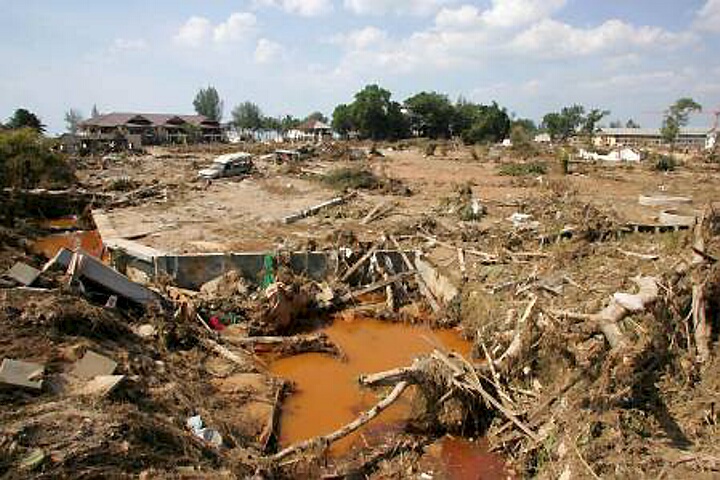
In 2004, the Andaman Sea side of Thailand was struck by a tsunami that wiped out the town of Khao Lak. This was the same massive tsunami that killed hundeds of thousands of people throughout S.E. Asia. Here's evidence of the damage: http://www.drgeorgepc.com/tsu2004IndoThaiKhaoLakBeach.jpg

Luckily, the town was completely rebuilt. We spent two nights in town, trying out the local restaurants and walking up and down the strip of stores. Our absolute favorite gastronomic experience was at Khao Lak Seafood. The pad thai and curry dishes were so good, we returned to this restaurant several times.

Because the town had to be completely rebuilt, brand new resorts went up. The main resort to go up is Le Meridian, a Starwood resort. As holders of the Starwood American Express card, we were able to collect enough points to redeem a five night stay for free.
Truth be told, the real reason we ended up in Khao Lak is because of our friends Dani and Silvia who were getting married that December in Mexico. Because we were in S.E. Asia and could not attend the wedding, we thought we'd surprise them on their honeymoon. Dani mentioned they would be honeymooning in Khao Lak. We knew that Dani, the quintessential Starwood Amex user, would be staying at a Starwood resort. We did some research and found that Le Meridian is the only Starwood property in Khao Lak. However, we still weren't sure when the newly-weds would show up. We tried to time it several days after the nuptuals. They finally arrived on our last night at the resort. It happened to be Christmas Eve, so the four Jews "celebrated" with an Italian dinner outdoors by the pool. It was a memorable evening.

The musical staff (three Philipinos dressed in Santa Clause outfits) that evening walked from table to table taking requests. We specifically asked for a song unrelated to Xmas. We were serenaded by a rousing rendition of "Besame Mucho."

Our stay at the hotel was really a good time. From the moment we got there, we were treated like royalty. We received beautifully with orchid necklaces placed around our necks. This for a couple of schmucks that showed up with scruffy backpacks in the back of a pickup truck. Our room may have been the bottom category of rooms, but it was truly luxurious with hardwood floors, bath robes and slippers, and a patio. Words cannot do it justice. You'll have to see for yourselves: http://www.starwoodhotels.com/lemeridien/property/overview/index.html?propertyID=1847

The resort boasted numerous amenities, including two massive swimming pools, beachside bar, a gym, tennis courts, and five different restaurants. In sticking with our frugal backpacking ways, we did sneak out a couple of times to eat at the roadside stands just outside the pearly gates of the resort. In truth, the food cooked by the locals was often tastier than that served at the posh restaurants inside the hotel. We found this surprising!

Unfortunately, all good things must come to an end. After 5 days, it was back to the airport for our flight up to Bangkok.

Saturday, May 2, 2009

Run For The Border

Entry 34:
While we were in Thailand, the government decided to revise the rules on tourist visas. It was no longer possible to purchase additional time for your visa at a reasonable price. In addition, upon entry of a landcrossing, tourists who once received a 30-day visa could now only get a 15-day visa. This had all the backpackers scrambling to extend their visas economically. The solution: a visa run. The closest international border for us was the Ranong crossing with Burma.
After a long bus ride from Phuket town, we finally arrived in Ranong and made it to the Kiwi Guesthouse across the road from where the bus dropped us off. We set our bags down and headed off for the only attraction. The hotsprings were located about 1 mile from the guesthouse, tucked away at the edge of town. It felt good to stretch our legs on this walk to the hotsprings after sitting on a bus for so long.

The hotsprings are a regular attraction for locals who use the natural source of water to do anything from bathing to soaking. There are three different pools. The first is where the locals hang out. The temperature of the water there is luke warm. Nearby we found additional pools, one of which held the remaining foreigners. The third pool was too hot for the touch. We dipped our toes into the water, but it was again too hot for lingering. These pools are considered sacred places; women are not allowed to remove their tops.
You can see a photo of the hotsprings by clicking here.

The most important reason for coming to this town of Ranong was that we needed to take a quick trip across the river to the border with Burma to renew our visa. We booked round-trip transportation with our guest house. The next morning we got shuttled to the boat dock where we boarded a longtail boat with other Western tourists and made our way to the border. Along the way, a teenage boy handed out slips of paper with menus of various illegal substances for sale in Burma. As tempted as we were to pick up some Viagra, we decided to skip it.

We read in the guidebook that it was important to have U.S. currency, especially crisp, unfolded $20 bills, as the Burmese authorities are notorious for not accepting anything less than perfection. When we got to the passport control office, we presented our crisp bills. However, these were still not good enough because they had red ink on them. Luckily, we had some other bills with us that were acceptable. Otherwise, we'd have been stuck paying three times the equivalent in Thai Baht. After having our photo taken, we were given our visas and were on our way via the boat.

We made it back to Thailand and booked passage back to the beach at Khao Lak, our next destination.

Almost Paradise

Entry 33:

Even though we knew that Phuket had a slightly tainted reputation with backpackers, we really wanted to just sit and relax on a white sand beach. We figured that Phuket must have the sought after beaches since it is such a popular tourist destination. After some careful reading of the guidebook, we settled on Hat Karen because it seemed like a less touristy option.

We boarded a minivan and headed to Phuket town. Phuket is a large island, but without a car, the only was to get from beach to beach is by taxi. The cab drivers know this and jack up the prices astronomically and still fill up with about 10 people! As a result, we stayed on Hat Karen and only explored the nearby Hat Kata by foot.

The white sandy beach was very wide and lined from end to end with hundreds of empty lounge chairs and parasols. The blue waters were refreshing after hours of baking in the tropical sun. To capture the sights and sound of this almost paradise, we videotaped a segment of our stay. It kinds of sounds like a Corona Beer television commercial:

The afternoons were capped off by a dip in the hotel's swimming pool.

We dined on grilled fish (smothered with butter and garlic), traditional Thai noodles, and curry dishes. That's when we weren't eating Indian!

The streets were filled with pale overweight Europeans and the shops stocked with overpriced garbage. Needless to say, we spent most of our quality time lying on the beach, strolling on foot, and dipping in the waters.

The following photo is self-explanatory:

For more photos, go to: grossmint.blogspot.com